

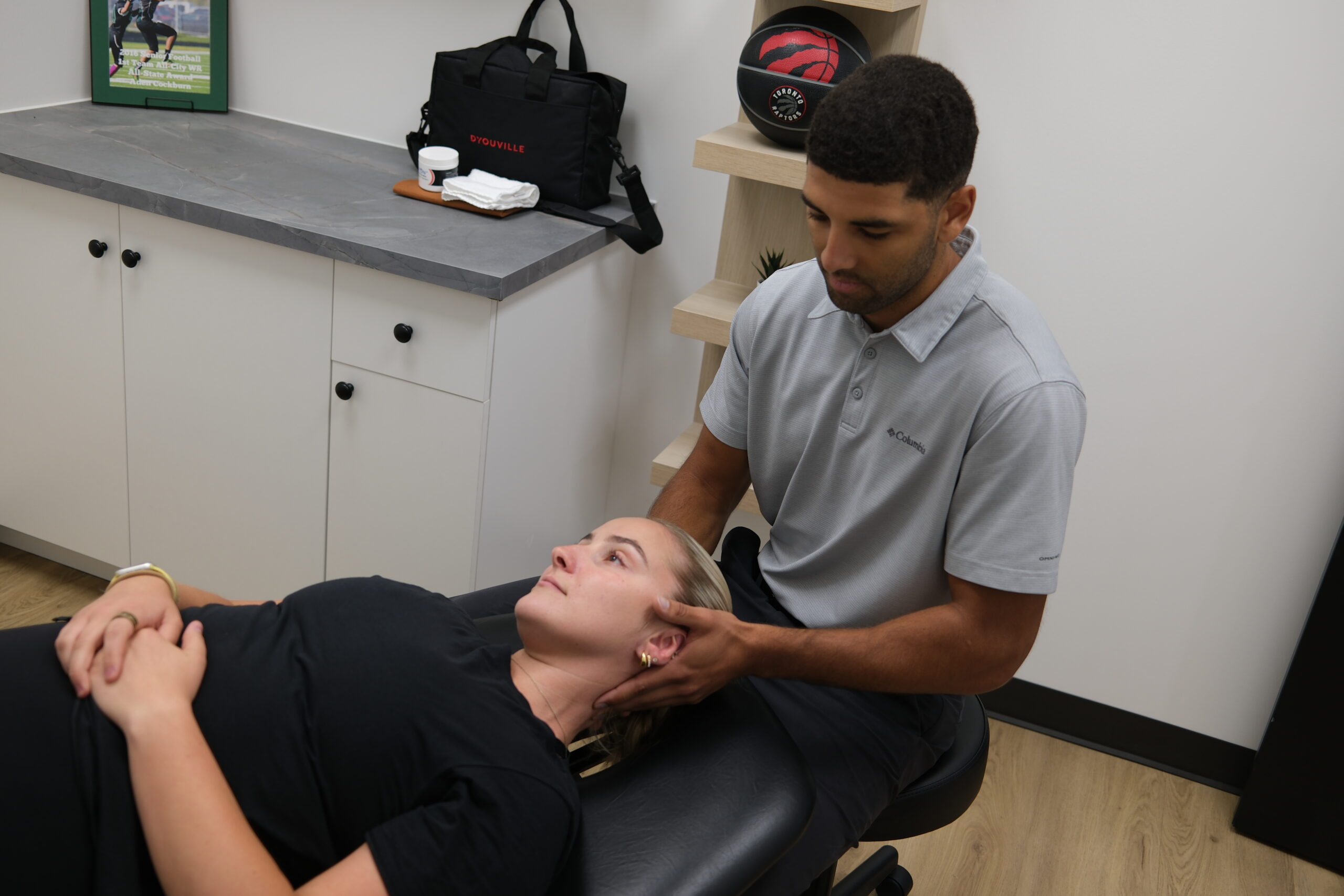
Headaches can have many different causes. Some headaches, including tension-type headaches and cervicogenic headaches, can be related to neck stiffness, muscle tension, posture, and stress.
Our approach focuses on identifying the factors contributing to your symptoms and creating a personalized treatment plan to help improve movement, reduce tension, and support long-term management. Treatment may include hands-on care, mobility exercises, and lifestyle recommendations based on your individual needs.
Common symptoms
Headaches related to the neck and surrounding muscles can present in different ways. Common symptoms include:
- Headaches occurring with neck tightness or stiffness
- Pain at the base of the skull
- Tension through the neck and upper back
- Reduced neck mobility
- Muscle tightness or discomfort
- Headaches that worsen with certain postures or movements
Understanding how your symptoms present helps us determine the factors that may be contributing to your headaches and develop an appropriate treatment approach.
Common causes and contributing factors
Headaches and muscle tension can be influenced by several factors, including:
- Neck stiffness and reduced mobility
- Muscle tension in the neck and upper back
- Poor posture
- Repetitive movements
- Stress
- Previous injuries
During your assessment, we evaluate your symptoms, movement, and contributing factors to better understand how your neck and surrounding tissues may be involved.
How chiropractic care improves headaches and muscle tension
Chiropractic care focuses on addressing contributing factors in the neck and upper back through hands-on treatment, mobility exercises, and education.
Your treatment plan may include:
- Spinal and joint manipulation or mobilization
- Soft tissue therapy to address muscle tension
- Mobility exercises to improve movement
- Personalized rehabilitation exercises
- Lifestyle recommendations to support long-term management
By improving mobility, reducing muscle tension, and addressing movement restrictions, treatment helps support better function and provides strategies to manage symptoms.
What to expect during your assessment and treatment
Your assessment begins with a detailed history and examination to understand your headaches, symptoms, lifestyle, and goals.
We assess factors such as:
- Neck mobility
- Movement patterns
- Muscle tension
- Contributing factors related to posture and daily activities
Based on your assessment, we create a personalized treatment plan that may include hands-on care, exercises, and education.
Throughout your care, we reassess your progress and adjust your treatment plan as needed to ensure your care continues to match your symptoms and goals.
When should headaches be assessed by another healthcare provider?
While many headaches can be related to musculoskeletal factors, some symptoms require medical assessment.
Seek immediate medical attention if you experience:
- A sudden, severe headache unlike anything you have experienced before
- Headache following a significant injury
- Rapid weakness
- Loss of consciousness
- Changes in speech, vision, or coordination
- Chest pain or shortness of breath
If you are unsure about your symptoms or whether chiropractic care is appropriate, speak with a healthcare professional.
Frequently Asked Questions
Chiropractic care commonly addresses tension-type headaches and cervicogenic headaches, which are often associated with the neck and surrounding muscles.
A cervicogenic headache is a type of headache that originates from structures in the neck. It is often associated with neck stiffness, reduced mobility, and pain that may be felt around the head or base of the skull.
Yes. Mobility exercises and personalized rehabilitation exercises are often included to help improve movement and support long-term management.
No. Our approach focuses on identifying and addressing contributing factors, such as neck mobility, muscle tension, and movement patterns, rather than only focusing on the symptoms.
The timeline varies depending on the cause of your headaches, your symptoms, and how your body responds to treatment. Your assessment helps determine the appropriate treatment approach.
Some headaches are related to the muscles and joints of the neck, while others require medical assessment. During your evaluation, we identify whether your symptoms are appropriate for chiropractic care or whether additional medical assessment is needed.