
Back and neck pain are common concerns that can affect your ability to work, exercise, and enjoy daily activities. Symptoms may develop from muscle strains, joint irritation, poor movement patterns, injuries, or prolonged postures related to work and everyday activities.
Our approach begins with a thorough assessment to understand what may be contributing to your symptoms. From there, we create a personalized treatment plan focused on improving movement, reducing pain, and helping you return to the activities that matter to you.
Common symptoms
Back and neck pain can present in different ways depending on the underlying cause. Common symptoms include:
- Neck pain or stiffness
- Low back pain
- Headaches
- Arm or leg pain
- Discomfort with certain movements
- Sharp pain during movement
- Reduced range of motion
Some people experience symptoms after an injury, while others develop pain gradually due to repetitive movements, posture, muscle weakness, or changes in how the body moves.
Common causes and contributing factors
Back and neck pain can be caused by a variety of factors. During your assessment, we look at your symptoms, movement, and daily activities to help identify factors that may be contributing to your pain.
Common causes and contributing factors include:
- Posture
- Repetitive movements
- Muscle weakness
- Injuries
- Reduced mobility
- Changes in movement patterns
Understanding the factors contributing to your symptoms allows us to develop a treatment approach that is specific to your needs and goals.
How chiropractic care can help
Chiropractic care can help reduce pain, improve range of motion, and address factors that may be contributing to your symptoms.
Depending on your assessment, treatment may include:
- Hands-on spinal and joint manipulation or mobilization
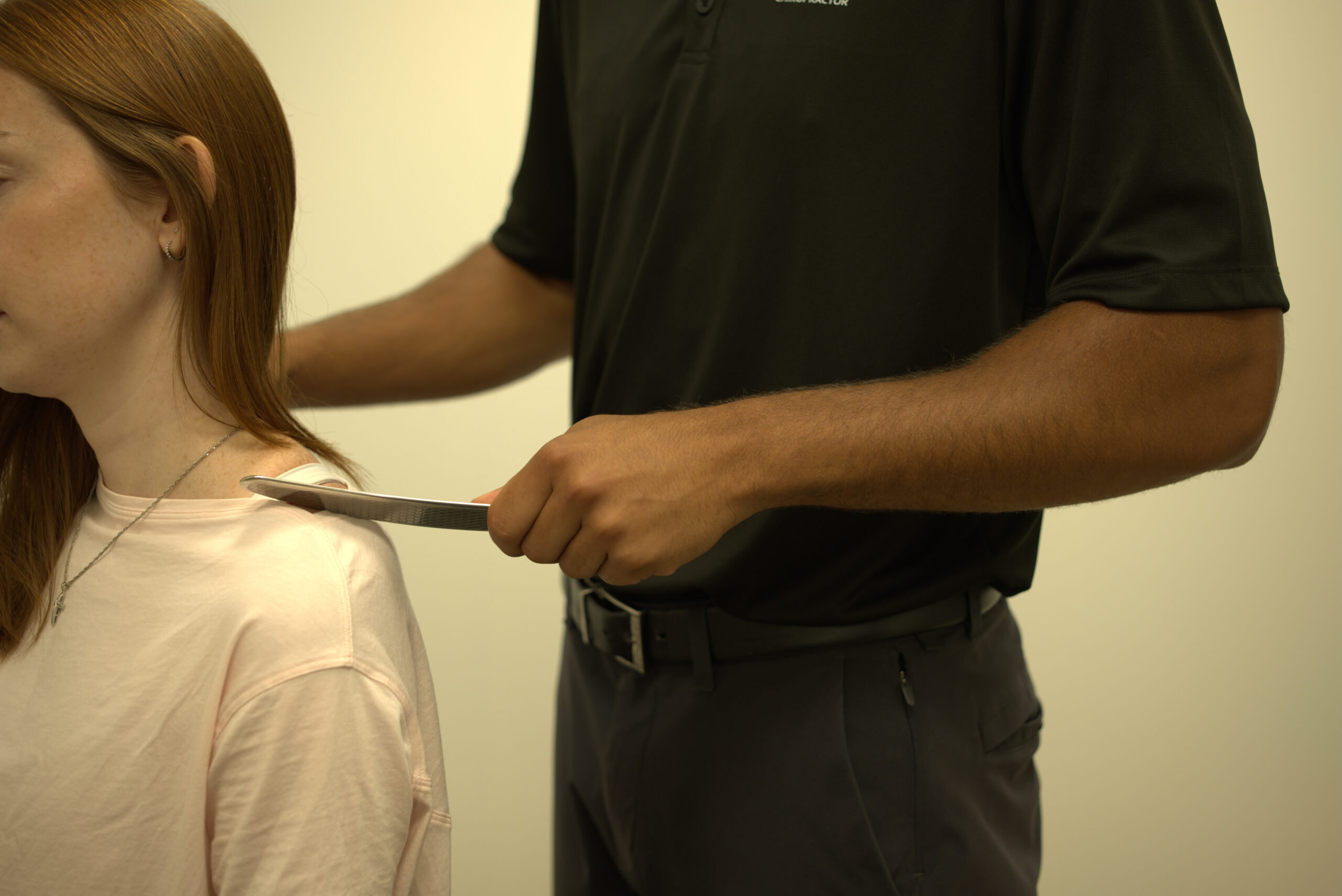
- Soft tissue therapy to address muscle tension
- Personalized rehabilitation exercises
- Mobility and strengthening exercises
- Education and strategies to help prevent future injuries
Our goal is not only to help reduce your current symptoms, but also to provide you with the tools and knowledge needed to continue moving well and stay active.
What to expect during your assessment and treatment
Your first appointment includes a detailed history, physical examination, and movement assessment to better understand your condition. We take the time to explain your findings, discuss your treatment options, and create a plan based on your goals.
Treatment may begin during your first appointment if appropriate. Your care may include hands-on treatment, rehabilitation exercises, and education about your condition.
Throughout your treatment plan, we perform reassessments to monitor your progress and make changes if needed. If your symptoms are not improving as expected, we will reassess your care plan and determine whether different approaches or additional referrals are needed.
When should back or neck pain be assessed by another healthcare provider?
While many cases of back and neck pain can be treated with conservative care, some symptoms require further medical assessment.
Seek immediate medical attention if you experience:
- Loss of bowel or bladder control
- Chest pain
- Shortness of breath
- Rapid weakness
If you are unsure whether your symptoms require medical attention, we recommend speaking with a healthcare professional.
Frequently Asked Questions
Back and neck pain can develop from muscle strains, joint irritation, poor movement patterns, injuries, repetitive activities, or prolonged postures related to work and daily life.
Not necessarily. Staying active is often an important part of recovery. Your activities may need to be modified depending on your symptoms and stage of recovery.
Not everyone requires imaging. A thorough history and physical examination are often enough to assess common musculoskeletal concerns. If imaging is clinically indicated, it can be arranged.
Posture can contribute to increased stress on muscles and joints, especially when combined with prolonged positions, repetitive movements, or reduced strength and mobility.
Recovery time varies depending on your symptoms, the cause of your pain, your goals, and how your body responds to treatment. Your recommended care plan will be discussed after your assessment.
Pain that travels into an arm or leg may involve irritation of nerves or surrounding tissues. An assessment can help determine what may be contributing to your symptoms and the appropriate treatment approach.
You may benefit from an assessment if your pain affects your daily activities, limits your movement, keeps returning, or prevents you from doing the things you enjoy.